 01
AI CONCEPT
01
AI CONCEPT
Distributed by design
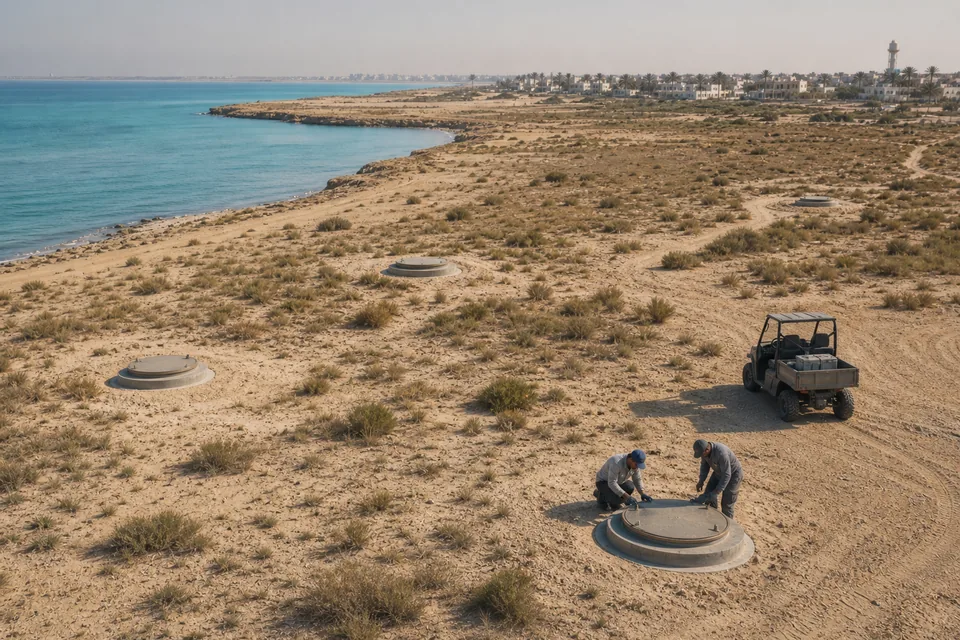
Independent production nodes reduce reliance on a single large process point and allow capacity to grow with demand.
Strategic water security
H2ON develops concealed, distributed desalination infrastructure designed for long service, local energy autonomy and continuous fresh water delivery in environments exposed to persistent aerial surveillance, sabotage and targeted disruption.

CONTINUITY AFTER LOCAL DAMAGE
The damaged node is isolated.01 / The idea
Large central assets deliver scale. H2ON adds a complementary strategic layer: concealed water production, protected storage and underground delivery distributed across the terrain so that reconnaissance or local damage does not automatically end the mission.
System architecture
We begin with the operating environment and the continuity requirement, then configure the network around local water, energy, access and delivery constraints.
01
AI CONCEPT
Independent production nodes reduce reliance on a single large process point and allow capacity to grow with demand.
 02
AI CONCEPT
02
AI CONCEPT
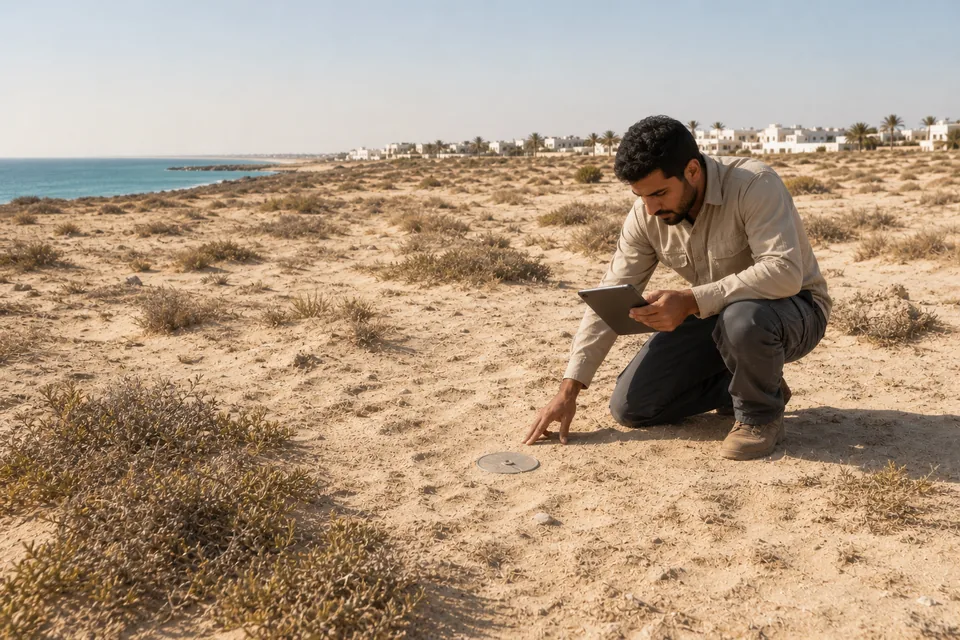
Low-profile and subsurface integration reduces exposed cues and direct surface stress, protecting the water mission from observation, weather and deliberate damage.
 03
AI CONCEPT
03
AI CONCEPT
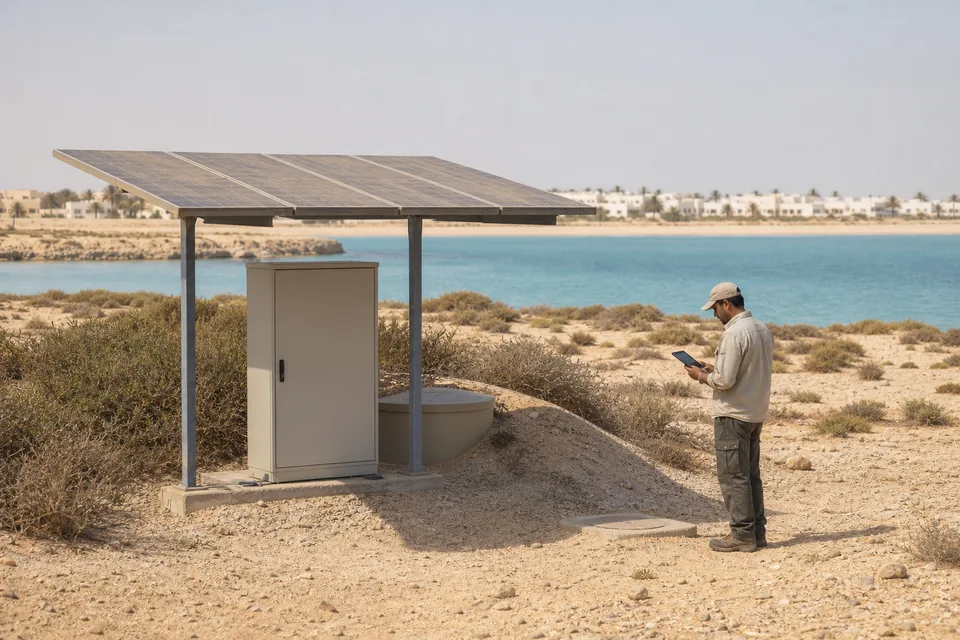
Flexible coupling to grid power, local renewables, storage, generator support and compatible recovered energy reduces dependence on any single external feed.
 04
AI CONCEPT
04
AI CONCEPT
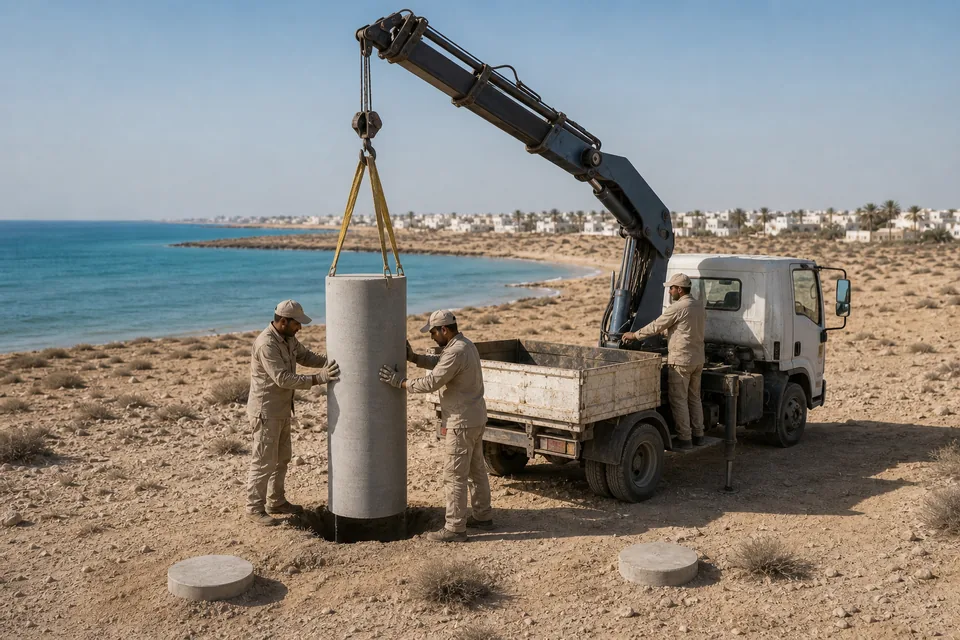
Add, isolate or service nodes without redesigning the entire water system. Build the network the mission actually needs.
AI-generated concept imagery. Fictional location, illustrative equipment and no representation of protected process details.
02 / The network
High-level architecture: technical internals intentionally protected
Strategic water security
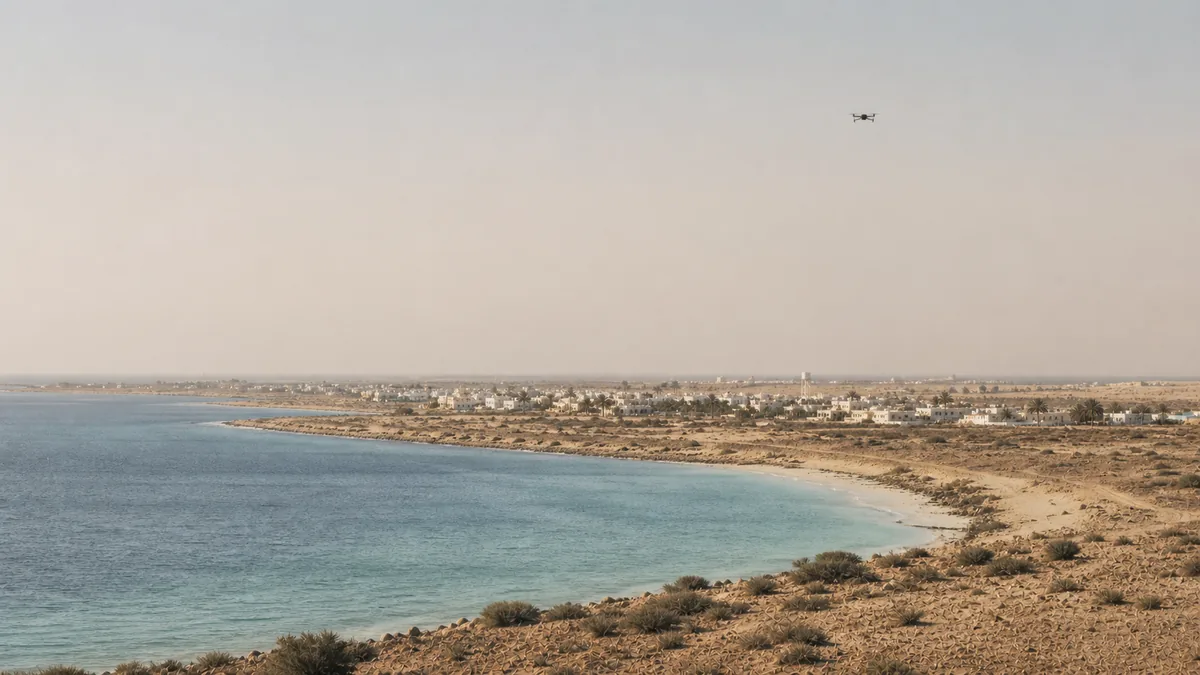 AI CONCEPT
Drones, satellites and multi-spectral sensors can map exposed plants, tanks, pipelines and activity patterns. H2ON applies concealment, ambiguity, distribution and recovery at the system level.
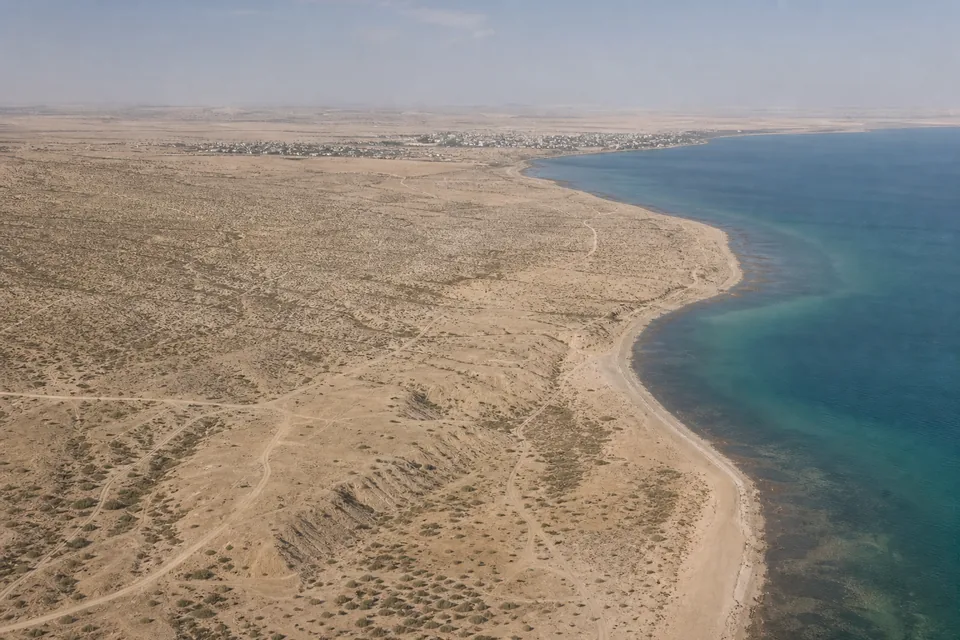
Airborne and orbital sensors search for repeatable visual, thermal and geometric signatures.
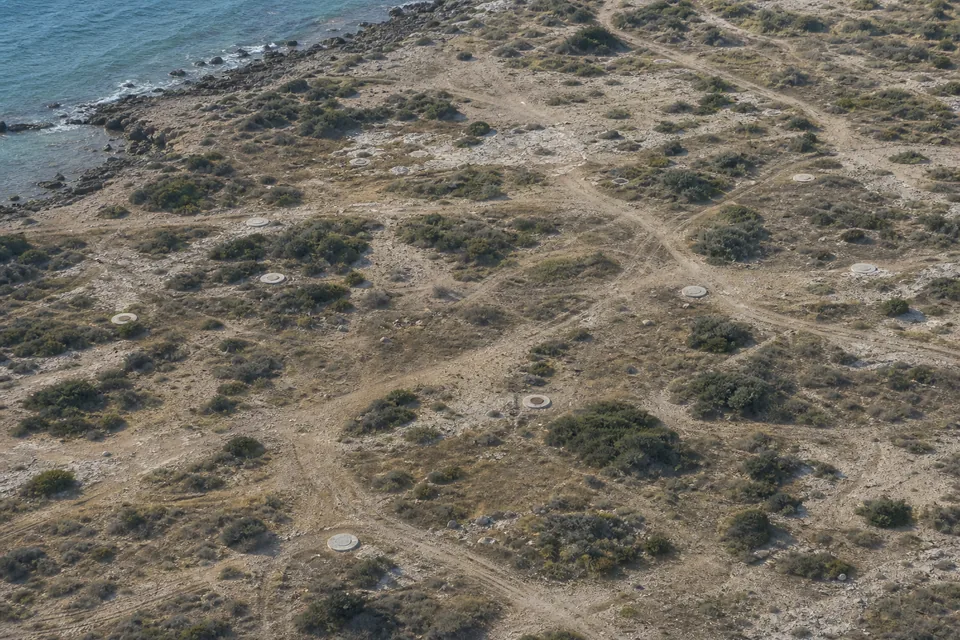
An observer tries to separate real modules, routes, reservoirs and activity from the background.
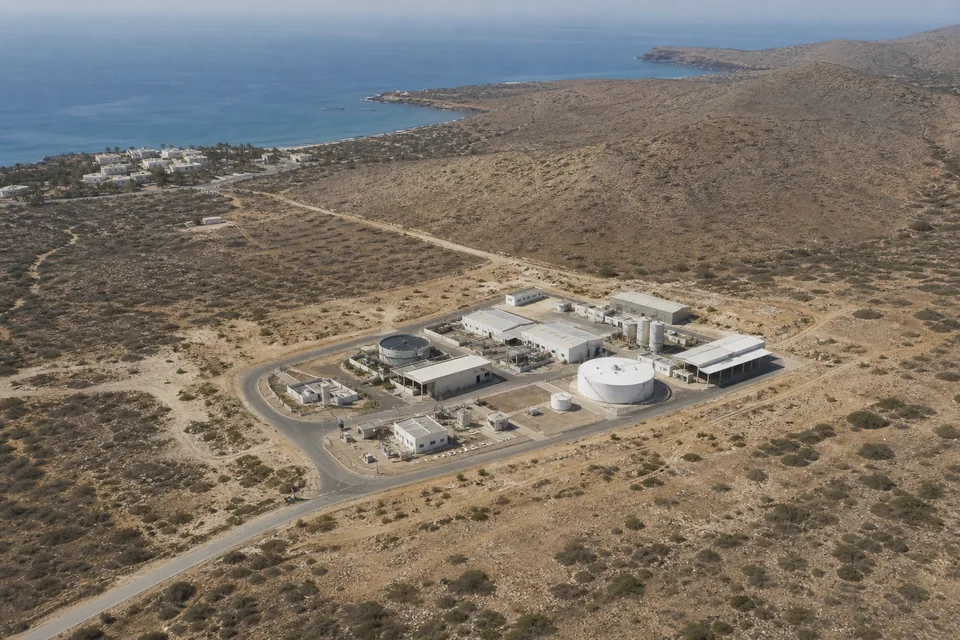
A conventional plant presents a decisive process point. A distributed cluster does not.
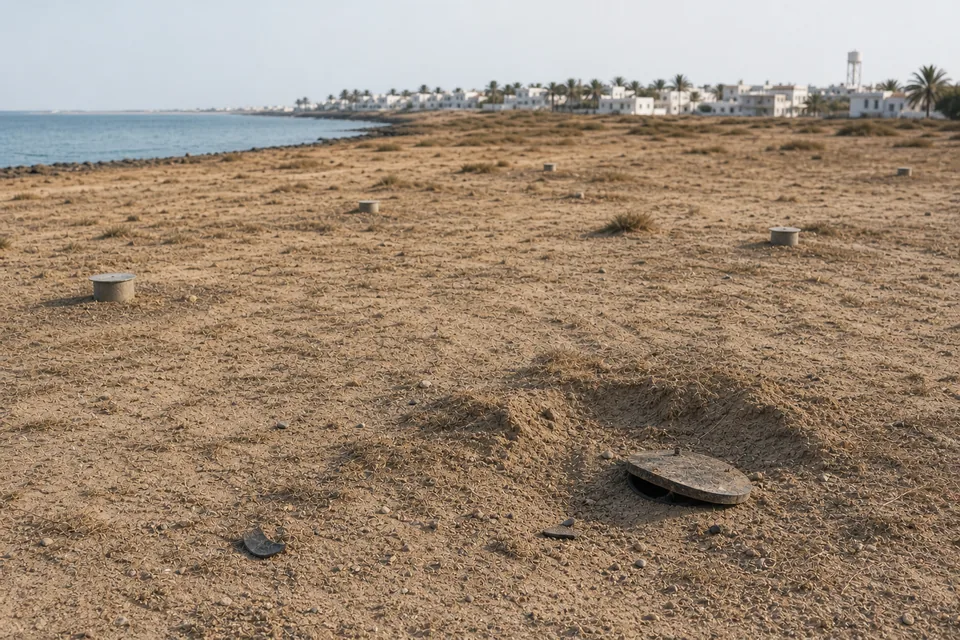
Loss of one node or route should remain local instead of stopping the entire water supply.
AI-generated concept imagery. Fictional location, illustrative equipment and no representation of protected methods or operational targeting data.
Subsurface modules and underground or underwater connections reduce visible infrastructure.
Site camouflage and optional decoy elements complicate rapid classification from the air.
Spatially separated nodes, energy and storage remove a single decisive target.
Fault isolation, protected reserves and network redistribution preserve available service after damage.
Protected water routes extend continuity from a concealed coastal cluster to inland users.
Disclosure boundary: H2ON does not claim universal invisibility. Signature performance is site-specific and must be validated against the relevant optical, thermal and radar conditions. Exact camouflage methods, decoy layouts, burial, routing, communications and thermal management remain protected.
Photoreal concept sequence
Follow one fictional Gulf coast from the arrival of a compact installation team to continued water delivery after localized aerial disruption.
Open all ten scenes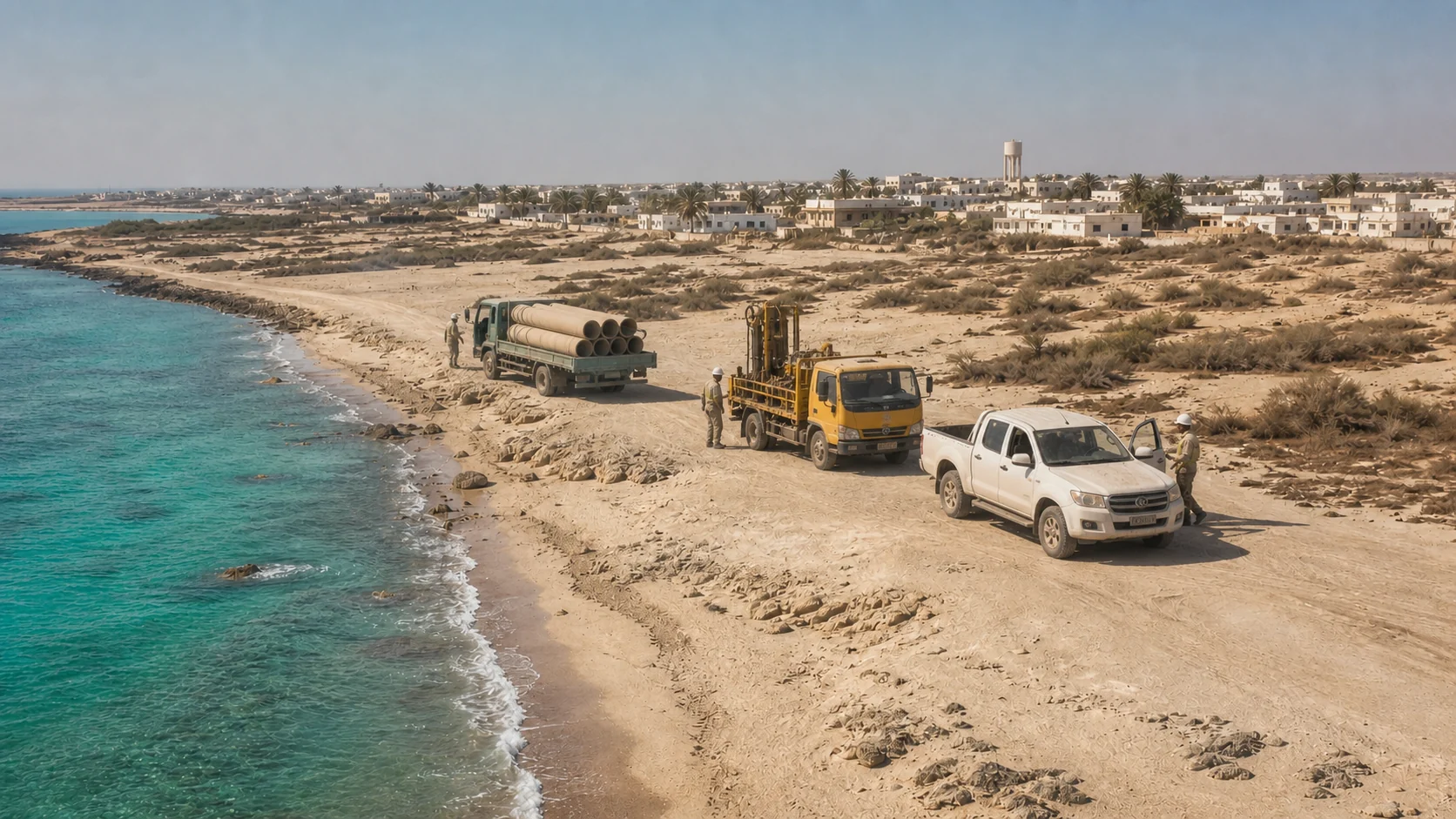 AI-GENERATED CONCEPT

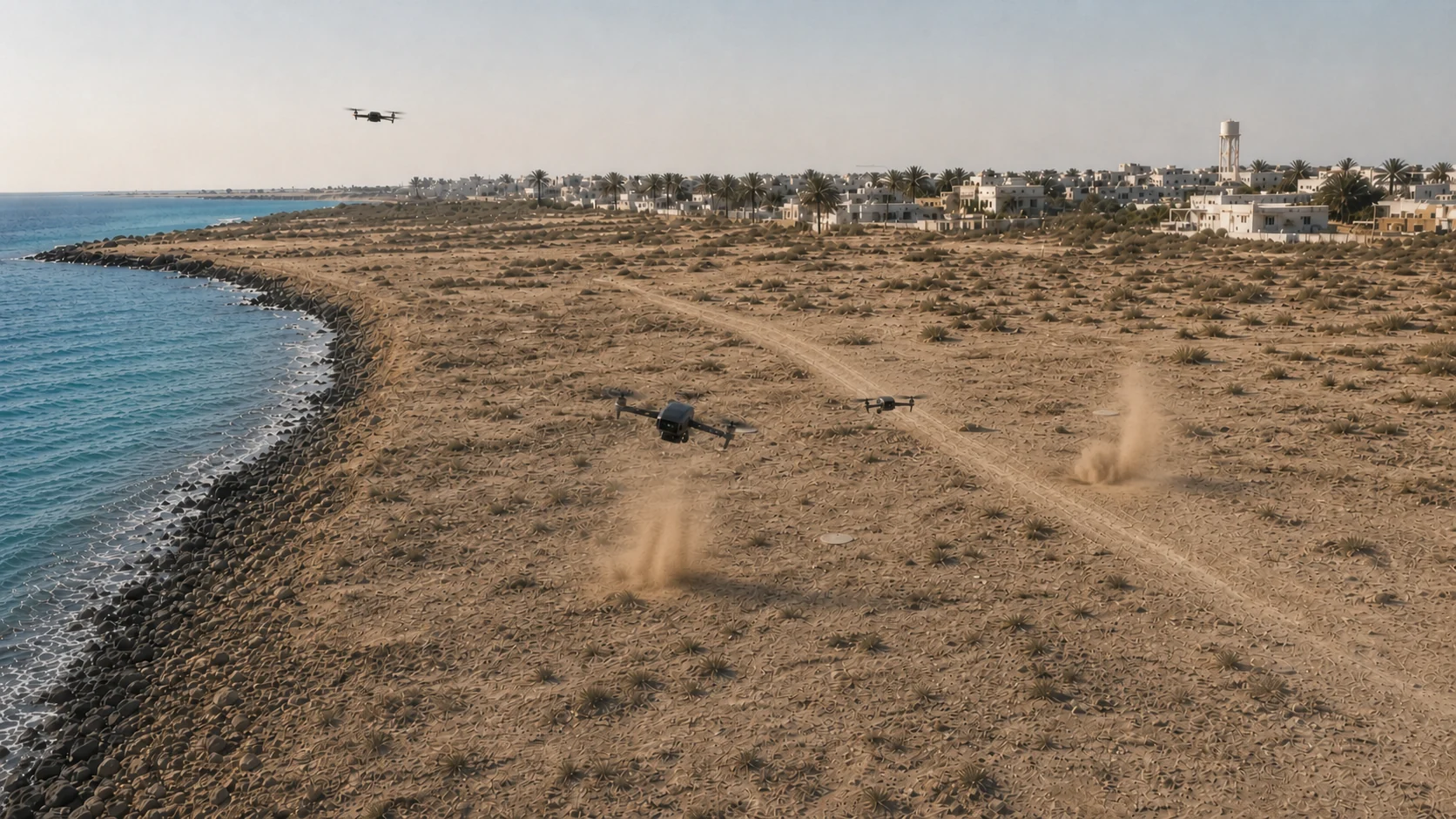
AI-generated concept imagery. Fictional location, illustrative equipment and non-technical topology. These images do not depict an operating H2ON site.
Endurance and energy autonomy
Strategic infrastructure is not judged on launch day. It is judged years later, when access is difficult, supply chains are strained and the grid is no longer a certainty. H2ON is conceived as a persistent water layer: protected, serviceable and able to draw from the energy that remains available on site.
01 / LONG-LIFE ARCHITECTURE
Protected by placement
Long service begins by reducing direct exposure and making every critical element serviceable. Protected placement, sealed exterior shells and distributed loading are intended to shield the mission from ultraviolet radiation, salt-laden wind, sand abrasion, traffic and casual interference.
Sheltered from the surfaceLow-profile and subsurface integration can reduce the environmental stress carried by exposed equipment.
Renew by nodeA worn or outdated unit can be isolated and exchanged without rebuilding the entire water system.
Maintenance without surrenderInspection, cleaning and service can be staged by section while healthy nodes remain available.
Designed to be provenMaterials, seals, corrosion, fouling and thermal cycles are validated against the real site environment.
The network can age gracefully because it does not have to age all at once.
02 / ENERGY INDEPENDENCE
Power without one umbilical
H2ON is designed around the energy portfolio available at the site, rather than one universal source. Grid power, local renewable generation, generator support, stored energy and compatible recovered resources can form a mission-specific energy layer.
Multiple pathways inEnergy integration can combine local sources so the loss of one feed does not define the whole network.
Storage turns time into resilienceWater reserves and energy storage can bridge intermittency, outages and delayed access.
Local decisions, safe statesControls can be configured for safe local operation when central communications are unavailable.
Autonomy sized to the missionReserve duration is engineered around critical demand, climate, source profile and continuity targets.
If the grid disappears, the water mission does not have to disappear with it.
Less exposed ageingProtected placement reduces direct environmental punishment.
Service by sectionRenew local equipment while the wider system remains available.
Source-flexible energyBuild around the energy assets the site can actually sustain.
Continuity reservesStored water and energy buy time when logistics cannot.
Engineering boundary: Long-life and autonomous configurations are site-specific engineering objectives, not universal constants. Final service intervals, endurance and autonomy duration are validated against feed water, corrosion environment, energy profile, climate and the required mission reserve.
Designed for continuity
A distributed topology is intended to localise disruption. Healthy nodes continue serving the network while a damaged or offline section is isolated, inspected or replaced.
Discuss your continuity scenarioCapacity is distributed across a configurable cluster.
The architecture is designed to preserve partial service during local disruption.
Individual sections can be taken offline without dismantling the whole network.
System-level health and supply status can be integrated into protected supervision.
Where continuity matters
The same network logic can support civilian resilience and strategic continuity wherever water access is exposed, distant or difficult to expand.
A protected supplementary water layer for sites where interruption carries strategic consequences.
Local production for settlements beyond the practical reach of conventional networks.
Modular capacity that can support staged recovery and temporary continuity planning.
Distributed supply for coastal operations and inland users connected through a planned delivery layer.
04 / Responsible disclosure
H2ON shares the mission, system architecture and integration logic publicly. Detailed process design, component geometry, operating parameters and deployment methods remain protected.
H2ON · Israel
We welcome conversations with infrastructure operators, integrators, strategic users, research partners and investors.
For a focused first meeting, tell us the location, water source, required continuity and intended application.